
“One of the Hardest Things Was Seeing Potential Go to Waste” — Zimbabwe Sevens Rising Star Carlos Matematema on Growing Up in Survival Mode Ahead of the Africa Men’s Sevens
From Mutoko and Mbare to international rugby, Zimbabwe Sevens star Carlos Matematema shares a story of resilience, opportunity, and belief ahead of the Africa Men’s Sevens in Mauritius.
PORT LOUIS, Mauritius – In a country where the choice of sport has traditionally followed one’s background, Carlos Matematema’s early years and childhood would not have pointed towards rugby.
Matematema was born in Zimbabwe’s remote rural district of Mutoko, where peasant farming is the backbone of livelihoods.
Here, everything else becomes less important than the daily grind. Sport, let alone rugby, is a luxury that many cannot afford.
Soon after his birth, Matematema’s parents moved with him to Mbare, Harare. Mbare is the Zimbabwean capital city’s oldest black township, a neighbourhood whose spine-tingling tales, both good and bad, are legendary.
After kindergarten in Mbare, Matematema was sent back to the village to begin primary school in Mutoko, under the care of his grandparents.
He would later return to Mbare for the rest of his junior school, from Grade 3 to 7, reconnecting with a suburb that is well known for its rich football history – being the original home of Zimbabwe’s biggest and most successful club, Dynamos FC.
Some of Zimbabwe’s finest footballers have roots in Mbare, and thousands of boys there grow up dreaming of following in their footsteps.
For Matematema, now 24, something different drew him in.
“I started playing rugby when I was 10 years old,” Matematema tells Rugby Africa Media.
“I was just taking a walk in my neighbourhood when I saw people playing rugby, it was like love at first sight. I asked the coaches if I can join, that’s how it all started. No one in my family had played rugby, or knew anything about it.”
The “people playing rugby” on a rudimentary local field that day were young boys from the Mbare Academy, which has, apart from Matematema, produced several Zimbabwe rugby stars in recent years.
One of the coaches Matematema introduced himself to was Daniel Wasili, a co-founder of Mbare Academy and long-time resident of the suburb, with an enduring passion for the youth of his community.
Wasili himself is a product of past Zimbabwe Rugby Union (ZRU)-contracted grassroots coaches who were dispatched to disadvantaged areas like Mbare in the early 90s to break new ground and shed Zimbabwean rugby’s elitist tag.
Just a few games for Zimbabwe’s second-string Sevens team in 2004 and 2005 was what Wasili’s playing career yielded.
At that point, his greatest joy shifted toward producing players who would go on to achieve more than he did, including his two daughters, who are currently part of Zimbabwe’s national women’s teams.
Wasili remembers the day young Carlos first turned up at training.
“Carlos came, and watched with childlike fascination,” Wasili says.
“He then came over to me and another coach, Simba Mutimbe, and said he wanted to join the other kids. He looked a bit tiny, but very athletic. He said he was a karateka at Chitsere Primary School in Mbare. On the rugby field, he was just a shoo-in, very natural athlete who didn’t take long to learn. We played him at scrumhalf. Mbare Academy used to be a feeder for our senior club called Mbare Bulldogs. In his first year of high school, Carlos was already playing senior club rugby for Mbare Bulldogs.”
Proceeding to St Peter’s High School in Mbare, there was concern that Matematema would switch sporting codes, as his new school did not offer rugby.
However, those fears were allayed when he continued to pursue rugby, thanks to the selfless work of the coaches at Mbare Academy and its senior club.
“Growing up in Mbare, football is the sport most people dream of playing,” says Matematema.
“But I fell in love with rugby. I was attracted by the physicality, the discipline, the teamwork and the values that rugby teaches both on and off the field. Choosing rugby was about following my passion, rather than following the crowd. It wasn’t easy because there weren’t many people around me taking that route. But I believed in the opportunities the sport could provide, and the person it could help me become. Coming from Mbare has actually been one of my biggest motivations.”
Another breakthrough came when Matematema transferred from St Peter’s to the famed Prince Edward School in Harare, the alma mater of Zimbabwean-born former Springboks Ian Robertson and Tonderai Chavhanga.
“(Prince Edward) coach Shaun De Souza spotted my talent and gave me a scholarship to Prince Edward Boys High. That is where I did my ‘A’ Levels and I believe this is where everything changed for me,” he says.
“There was exposure, being coached by one of the best coaches in the country, getting national call-ups. Representing my country is one of the greatest honours of my life. Every time I wear that national jersey, I know I’m carrying the hopes, pride, and dreams of millions of people. It’s a feeling that’s hard to put into words, standing alongside teammates, hearing the national anthem, and knowing you’re competing for something bigger than yourself.”
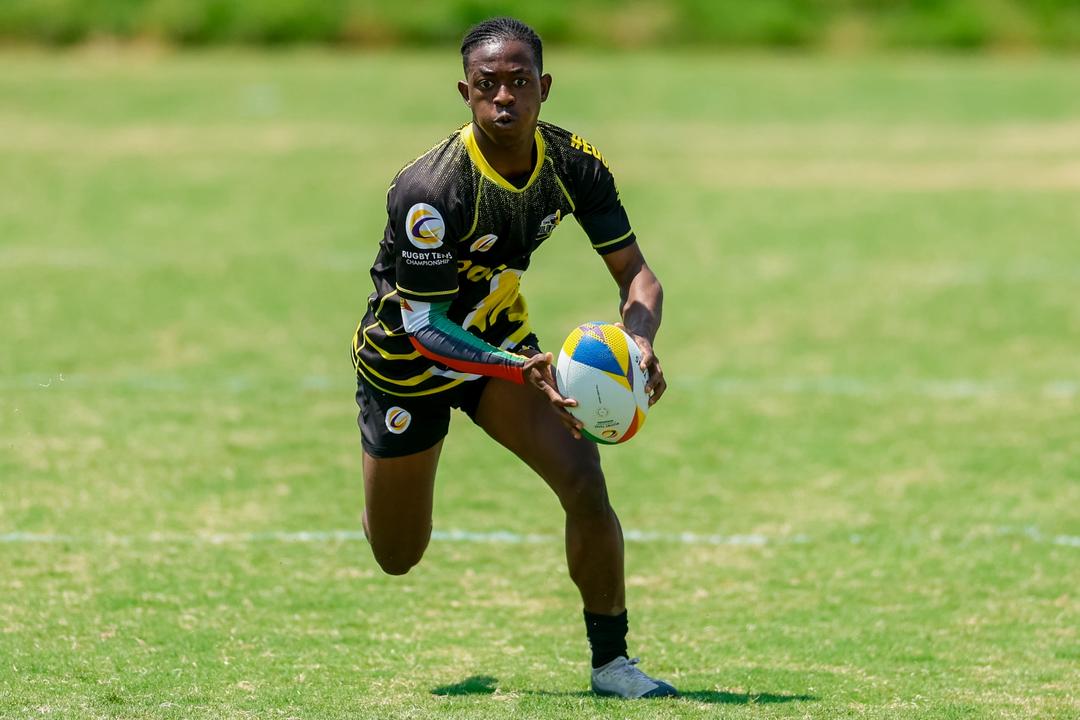
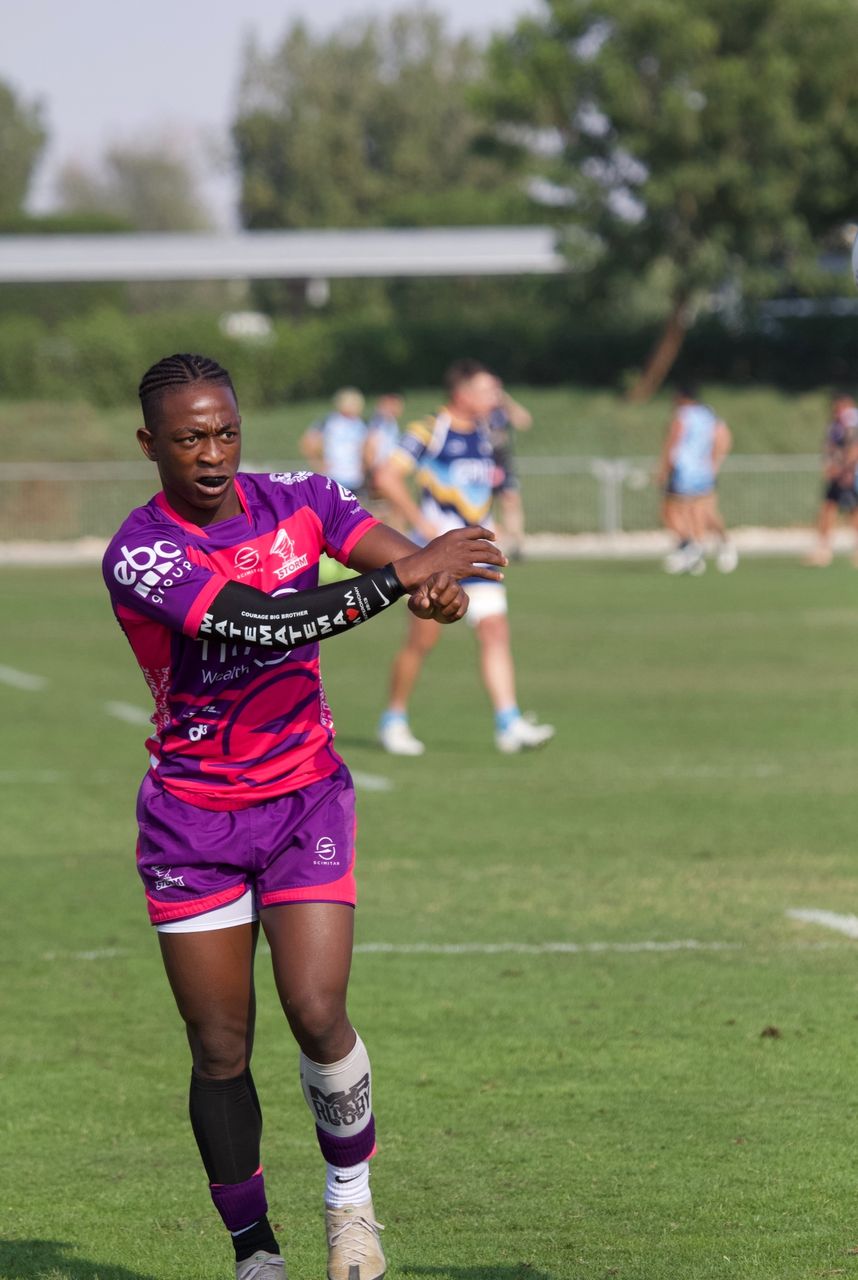
A playmaker and winger in Sevens rugby, Matematema is a real livewire on the field and is one of the exciting players expected to light up the Rugby Africa Men’s Sevens 2026 tournament in Mauritius later this month.
Zimbabwe, nicknamed the Cheetahs in Sevens, will contest the Rugby Africa Men’s Sevens with 11 other top teams on the continent.
Matematema has been part of Zimbabwe’s preparations in Harare from the beginning.
“I’m really excited about the Africa Sevens in Mauritius,” he says.
“It’s one of the biggest stages in African rugby, and it’s an opportunity for us to test ourselves against some of the best teams on the continent. We’re looking forward to the challenge and to proudly represent Zimbabwe. The commitment from everyone has been excellent, and we’re determined to arrive in Mauritius ready to compete at our highest level.”
As Matematema represents his country with pride at the highest level of African rugby, he has also remained conscious of his responsibility to those who know him well and look up to him.
“To the young people of Mbare, my message is simple: never let where you come from determine how far you can go,” Matematema says.
“I come from the same streets, faced many of the same challenges, and had the same dreams. What made the difference was believing that there was more possible for my life and being willing to work for it every single day.
“Your circumstances do not define your future. Whether your dream is in sport, education, business, music, or any other field, success starts with discipline, consistency, and believing in yourself when nobody else does.”
To him, his home area is a place where greatness can be unearthed.
“Mbare is full of talent, resilience, and potential,” Matematema says.
“We have a spirit that refuses to give up, and that’s something to be proud of. Use every challenge as motivation, stay away from things that can derail your future, and surround yourself with people who push you to be better.
“One of the hardest things was seeing potential go to waste because of poverty, peer pressure, and the challenges that come with growing up in an environment where survival often comes before dreams.
“Dream big, work hard, stay humble, and never stop believing. The world is bigger than the streets you grew up in, and your story is still being written.
“But if a young boy from Mbare can travel the world through rugby and represent Zimbabwe, then there is no limit to what the next generation can achieve. That’s why I carry Mbare with pride everywhere I go.”
Written By Enock Muchinjo