
This page is also available in:
 Français (French)
How Mali Built a Rugby Model for Emerging African Rugby Nations

“Five nations, all aspiring to become World Rugby members — exactly the kind of members the game needs,” said Rugby Africa President, Herbert Mensah, as the 2026 UFOAR Zone B Tournament in Bamako demonstrated how emerging rugby nations can build a sustainable pathway to global membership.
BAMAKO, Mali – In rugby’s global spotlight, some tournaments arrive with the usual credentials of big-stage venues, established pathways, and nations already embedded within the sport’s elite institutions.
But in Bamako, Mali, last week’s 2026 UFOAR Zone B Tournament challenged that assumption in a way that Rugby Africa President Herbert Mensah believes should change how the game views emerging rugby nations.
Held at the Kabala Centre in the capital city of Bamako, the five-nation tournament brought together the hosts, Mali, alongside Benin, Togo, Niger, and Guinea, showcasing their rugby beyond the sport’s familiar power centres. None of the participating teams are yet members of World Rugby, yet they competed in an environment that, in Mensah’s view, matched global standards.
For many outside Africa, the event may have been easy to miss, especially with attention focused elsewhere in rugby’s calendar. But what happened in Bamako was more than a footnote. It was a statement about fairness, development, and the role of governments in growing rugby’s next generation.
A tournament that raised a bigger question
“What an extraordinary tournament it was because, for those outside Africa and even parts of Africa, they will be saying, ‘Where is Bamako?’ Well, it’s the capital of Mali… Are they World Rugby members? They are not World Rugby members,” Mensah told Rugby Africa Media.
But rather than viewing this as a justification for limited investment, Mensah said it should instead be treated as evidence against a restrictive mindset.
“We shouldn’t just be dealing with the elite… on the limited budget we have… And we say, ‘Let it roll, let others just deal with community rugby.’ That is wrong,” he said.
For Mensah, relegating emerging nations to “community rugby” creates a developmental ceiling that assumes capability is scarce rather than widely distributed.
“The fact of the matter is that talent is spread, and it’s ginormous.”
Bamako mattered not only because the games were played, but because it demonstrated what happens when opportunity is matched with high standards.
What Mali built: an ecosystem, not just a match day
The tournament in Bamako was exceptional, largely because of what Mali prepared around it.
“The infrastructure they have in terms of the field and the hotels at the venue is of the highest standard,” remarked Mensah.
The facilities met what he described as global expectations, including floodlighting—an important feature for tournament readiness and professional scheduling.
Beyond the immediate hosting arrangements, the broader sporting development plan operating within the same environment also made an impression.
“They now even have a School of Sport, which covers all disciplines, from martial arts to tennis. Within the same compound, they have taken over 40 hectares to develop sport.”
Why it matters: governance, legitimacy, and the development gap
The UFOAR Zone B Tournament highlighted a governance reality that often shapes development in international sport: membership status and who gets treated as “ready” for high-performance hosting.
“Five-nation tournament, all of them bidding to become members of World Rugby. And they are the kind of members that World Rugby needs,” said Mensah.
The tournament offered a credible demonstration of organisational capability and competitive rugby, backed by facilities capable of supporting high-level competition.
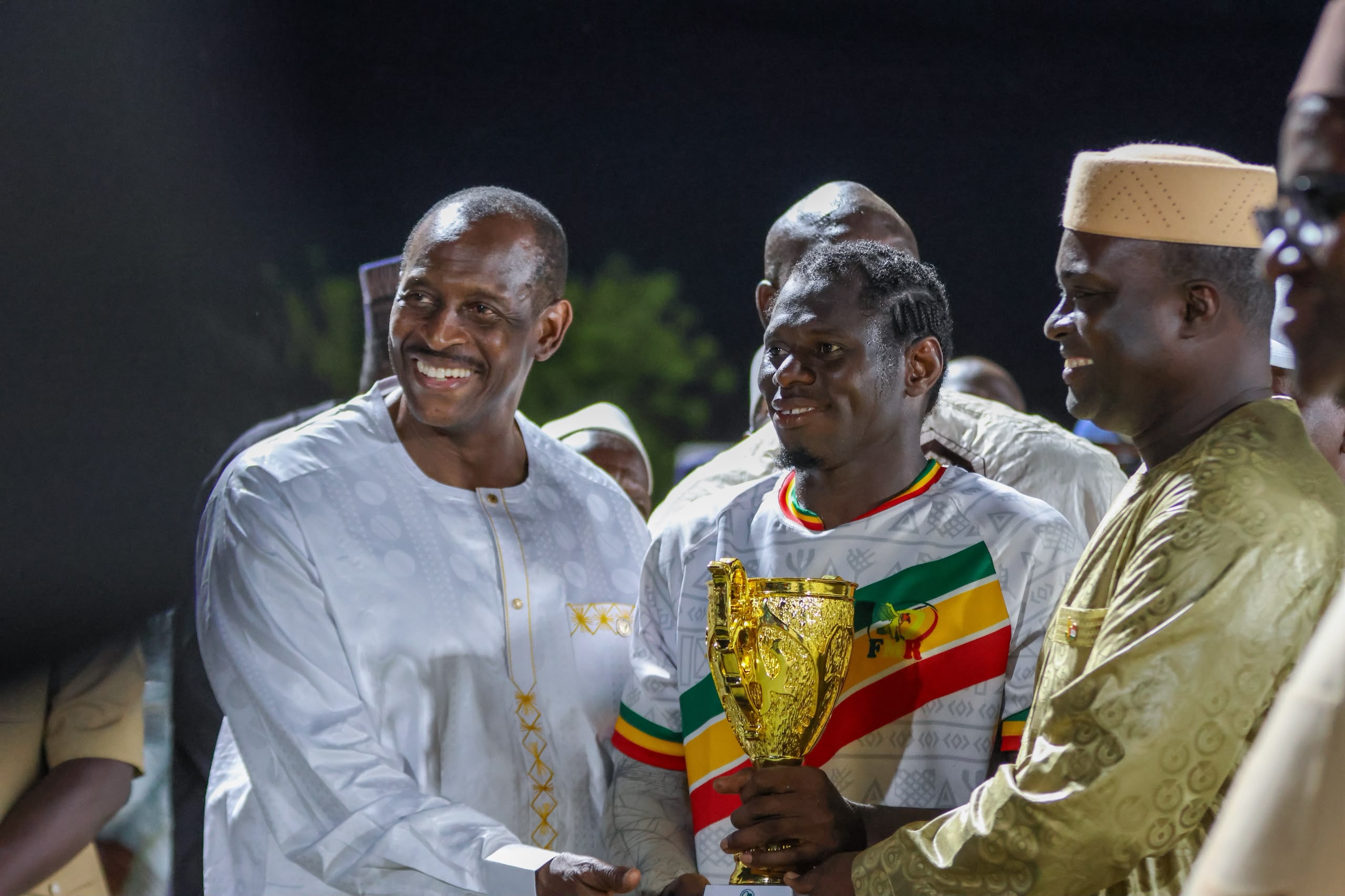
“This tournament I witnessed, fully funded by the Government of Mali, is exceptional,” Mensah said.
The implication is clear: if emerging nations can deliver world-class standards when properly supported, then the pathway to inclusion should be guided by performance and structure, rather than restricted by existing membership status.
Who benefits: teams today and the pipeline tomorrow
The beneficiaries include not only the participating countries and their rugby ecosystems, but also Rugby Africa’s broader development mission.
Mensah noted that some countries funded their own participation and even flew their teams directly to Mali, underscoring that the motivation to compete and progress exists even when external support is limited.
That level of commitment matters because it transforms tournaments into investment opportunities for national unions. Players gain valuable experience in a professionally staged environment, coaches assess how their teams perform under structured conditions, and administrators learn what it takes to deliver events that meet higher standards.
Mensah also described the tournament as a platform that produced “great rugby”, reinforcing that the case for development is not theoretical. The competition itself delivered the rugby outcomes that the investment was intended to create.
The government-sponsored model: central to the blueprint
Mensah placed particular emphasis on the role played by the Malian Government. He did not view its funding as incidental. Instead, he described it as the key factor that made the tournament’s quality possible.
“The Malians’ organisational skills and facilities have shown that this can be a template for emerging nations in Africa, with governments playing a central role.”
That statement also answers an important question beyond Bamako: can the model be replicated? Mensah believes it can, because its success was built on structure and long-term investment rather than chance.
Challenges remain, and the model still needs champions
Even if Mali’s approach provides a template, replicating it will require political will, sustained funding, and effective administrative coordination. Not every emerging rugby nation can immediately match the scale of Mali’s facilities or land available for sports development, while rugby’s governing bodies continue to face budget constraints that limit the reach of development programmes.
A new argument for rugby’s next era
As the sport searches for sustainable growth, Bamako offers a compelling case study. If emerging nations are given serious platforms, they will not only compete. They will build the case for inclusion through performance, structure, and facilities, turning rugby development from a promise into a practice.
Written by Enock Muchinjo